

 Marco Bezzecchi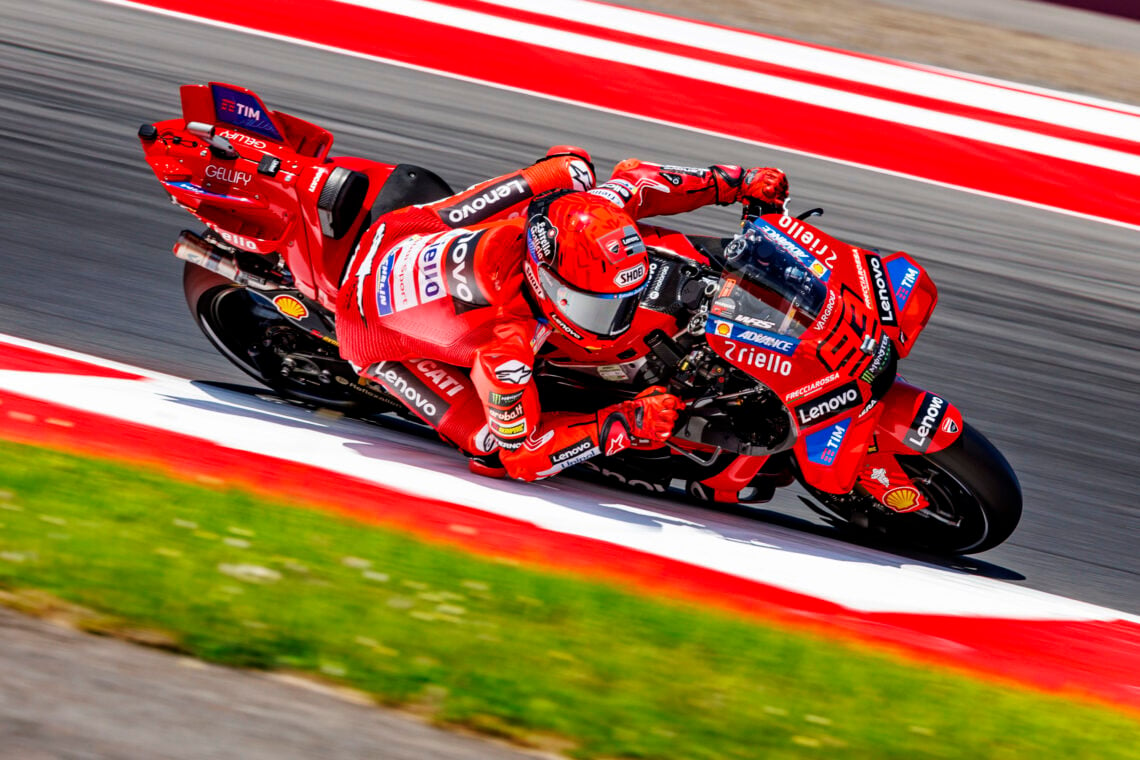


MotoGP is banning ride-height devices from the start of the 2027 season. Ducati were the pioneers of the controversial innovation, which first appeared at the end of 2018.
Front ride-height devices were already outlawed in 2023, but now there will be a total ban as part of sweeping regulation changes.
Ride-height devices (RHD), now used by every team, are primarily seen as a risk to rider safety, but some also believe they reduce the emphasis on rider skill. Pedro Acosta is expected to benefit when the ban comes into force.
What MotoGP rule would you like to see Liberty Media change?

While the RHD dispute has now been resolved, there are still technical disagreements in the MotoGP paddock.
KTM want ‘mass dampers’ out of MotoGP
Just before the advent of the ride-height device, Ducati introduced a mass damper, a part designed to minimise vibrations. Inevitably, when rivals saw that it worked, they introduced their own version.
As Pit Beirer explained to Motor Sport Magazine, KTM feel that the mass damper technology is a form of active suspension, which is banned in MotoGP. On that basis, they want them ‘out’.
Beirer said: “When all this started, we said, ‘This is like active suspension showing up,’ and then we were told, ‘No, no, active suspension will never be allowed in MotoGP.’ It would be good if mass dampers were out.”
Because this isn’t a safety issue, it may be that every manufacturer has to give their consent for the ban to be imposed.
Ducati were the nearest challengers to the Marc Marquez/Honda dynasty at the end of the 2010s and have won every constructors’ title since 2020. They have been the class of the field mechanically and electronically in this period.
The Aprilia wings debate that’s raging behind the scenes
Meanwhile, MotoGP teams could ban ‘leg wings’ with immediate effect. These were introduced by Aprilia in May and copied by Honda soon after.
The argument among rivals is that the wings put the riders at risk in the event of a crash, though this would be a pre-emptive rather than reactive measure.
It’s believed that a seat aero ban could turn the MotoGP paddock ‘upside down’ heading into next year. Aprilia, who led the charge towards Ducati at the end of 2025, may be seriously compromised by the timing.
As it stands, there are no major changes to the regulations for 2026, but there may yet be a last-minute rewrite.
Receive racing news and updates twice a week to your mailbox


