

 Marco Bezzecchi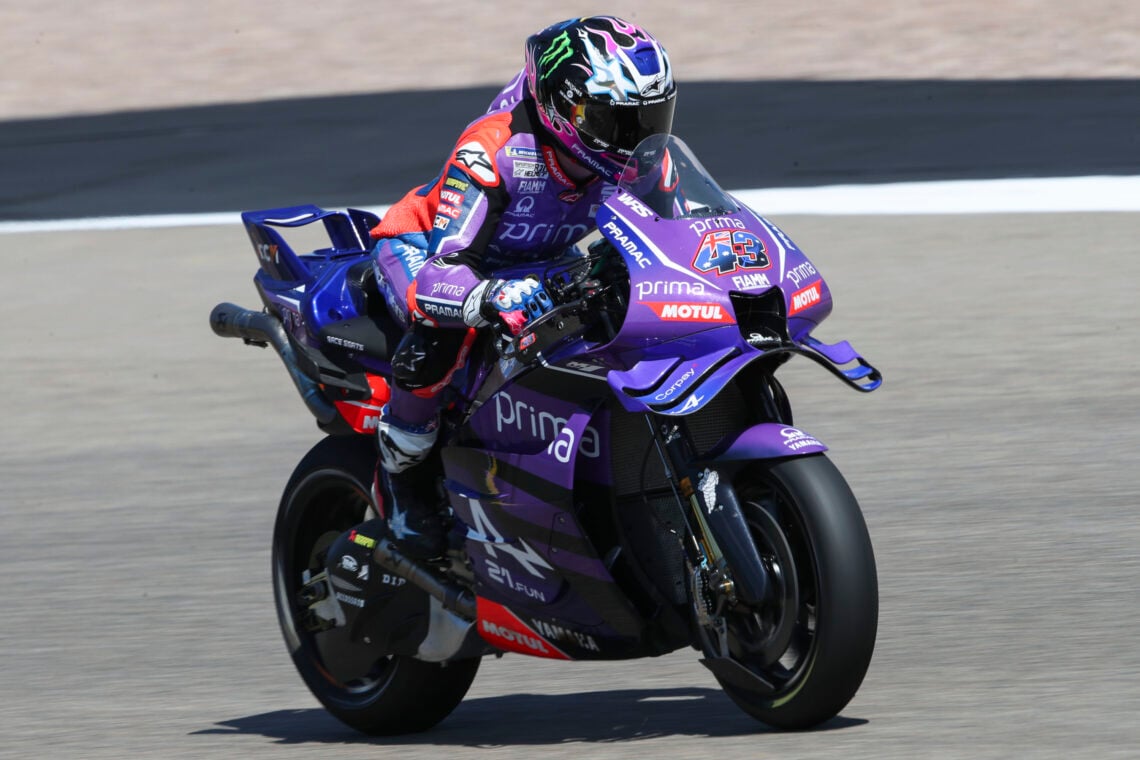


Mat Oxley was left in awe after spotting a “mad” new swingarm upgrade on Fabio Quartararo’s Yamaha M1 at the German GP. The same upgrade was later seen on Jack Miller’s Pramac bike, and aided the Australian in setting the fifth-best time in practice.
It was a stellar effort from the Australian, who secured a direct spot in Q2 of Saturday’s qualifying session at the German Grand Prix for the third time this season.
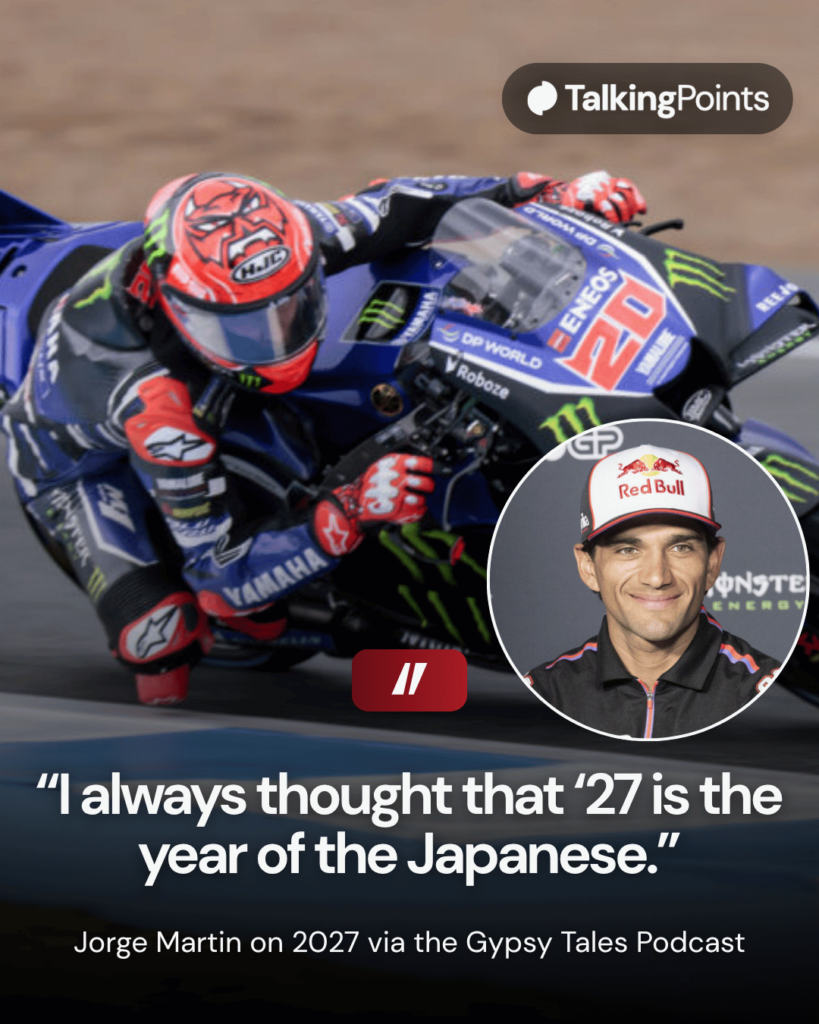
Jorge Martin thinks Honda and Yamaha will return to form in 2027 👀 How do you think they will fare with the new regulations?
Miller’s best effort saw him just four-and-a-half tenths off Marc Marquez’s benchmark in practice. Quite the surprise, considering the swathe of difficulties that Yamaha have faced in trying to provide a competitive bike for the four riders in the Japanese stable.
With the Iwata-based factory severely struggling in the straight-line speed department since their shift to a V4 engine layout, they have seemingly found a way to reduce the drag of the M1 through the use of some neat little winglets at the rear of the bike.
- READ MORE: MotoGP practice results as Marc Marquez sets the pace at German GP but Francesco Bagnaia in Q1
Mat Oxley spots ‘mad’ new swingarm upgrade on Yamaha’s MotoGP bike
In a post on social media platform X, MotoGP expert Mat Oxley drew attention to a new swingarm upgrade that he had spotted on Fabio Quartararo’s bike after the pre-qualifying practice session.
The upgrade features three winglets that are angled in an attempt to improve airflow at the rear of the bike. Accompanying an image of the upgrade, Oxley wrote, “Yamaha’s new swingarm aero – a much prettier job than Aprilia’s and Ducati’s.
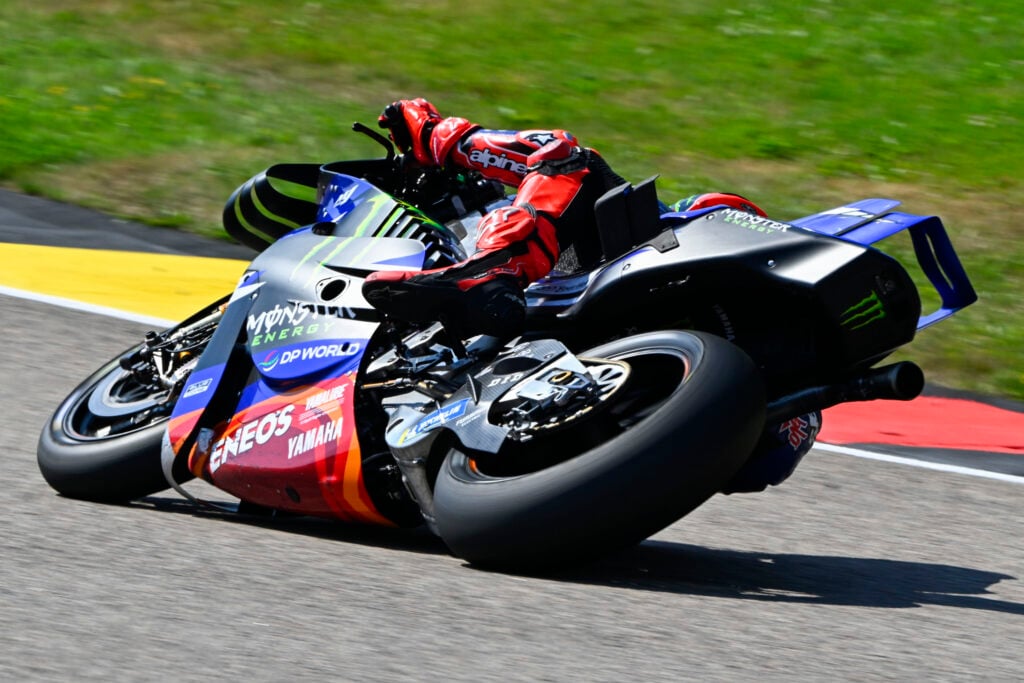
“And they’ve gone mad for vortex generators, which speed up airflow to reduce airflow separation at the back of the bike, which otherwise causes turbulence and drag.”
The reduction in drag is expected to give each of Yamaha’s riders a decent boost in straight-line speed and a more stable rear-end upon their entry into the braking zones.
The benefit was clear to see, with Miller running the older spec swingarm in FP1, before switching to the new configuration for the afternoon practice session and cementing his spot in Q2.
Despite the obvious positives, the new component could prove to be detrimental in racing conditions. Due to the lesser turbulent air that the winglets spit out, rivals that are behind Yamaha’s bike are less likely to feel the effects of aerodynamically dirty air.
- READ MORE: Sylvain Guintoli spots something strange on Toprak Razgatlioglu’s Yamaha at the German Grand Prix
The vortex generators make the detachment of air from the swingarm less messy, shrinking the chaotic effects of the dirty air and reducing the overall footprint of the bike as it carves its way through the wind.
Keen-eyed MotoGP fans saw similarities between Yamaha and Ducati’s bikes upon the unveiling of the new M1 last year. There can be no doubt now that the Japanese brand have taken inspiration from their rivals, and it could be the key to their resurgence in the premier class.
Receive racing news and updates twice a week to your mailbox


