

 Marco Bezzecchi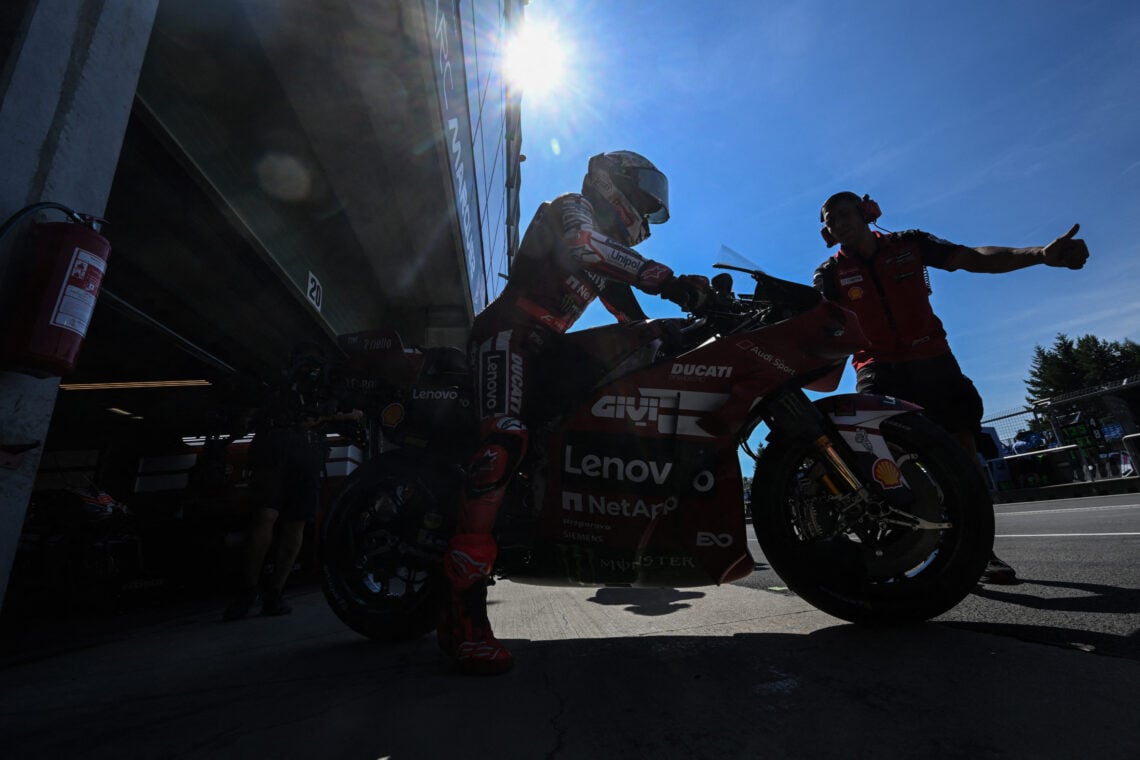


Ducati rider Marc Marquez tested a 2027-spec MotoGP bike for the first time at Brno on Monday.
The test, which featured all five manufacturers, took place behind closed doors. The teams ran on prototype Pirelli tyres as the Italian company prepare to take over from Michelin.
24 hours before Marquez’s contract extension was confirmed, he represented Ducati alongside Fermin Aldeguer, who is set to move from Gresini to VR46 next year.
How many MotoGP titles will Marc Marquez have to his name by the end of 2028? 👑
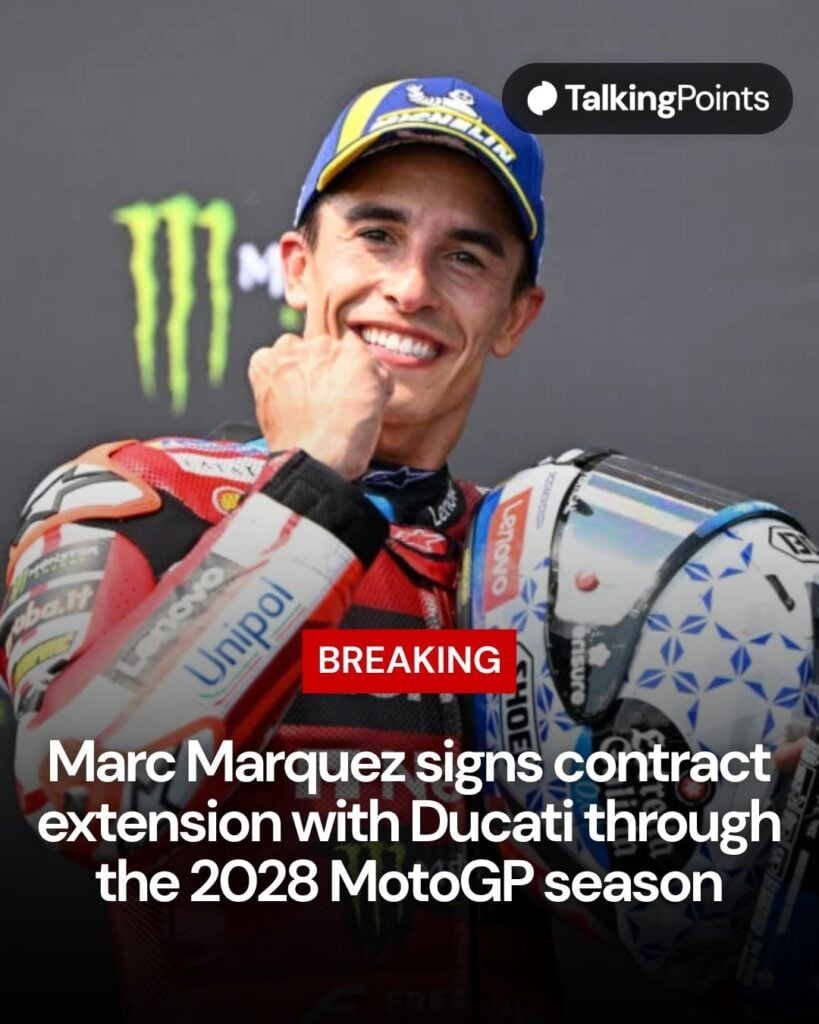
Marc Marquez was three seconds down on Brno qualifying pace
Sky Italia obtained lap times from the test, which showed that Aprilia rider and championship leader Marco Bezzecchi set the pace on a 1:53.9, only hundredths ahead of Trackhouse’s Raul Fernandez.
Aldeguer was a tenth further back, with Toprak Razgatlioglu fourth on the Yamaha (1:54.2) and Pedro Acosta, who surprisingly rode the KTM despite his impending Ducati move, fifth (1:54.3). Marquez missed the afternoon running after a minor crash but still placed sixth on a 1:54.4.
As ever, testing times must be treated with caution, particularly when they’re unofficial. Fanpage report that not every team used an 850cc engine, with others adapting their current bikes to simulate the new rules instead.
What do you think of the 2027 MotoGP regulations?
Are they a step in the right direction for the sport?
Naturally, the run plans of each team will also differ, but it was intriguing that the top six were so closely matched. Sky’s report suggests the best times were set on flying laps rather than long runs.
Marquez was around three seconds slower than his time from Saturday’s qualifying session, while Bezzecchi was about 2.5 seconds adrift and Aldeguer was closer to two seconds.
- READ MORE: MotoGP’s 2027 regulations explained from 850cc engines and aerodynamic changes to new Pirelli tyres
The bikes will inevitably get faster as development continues but for now, it seems as if the delta to the 2026 machinery stands at two to three seconds. It will be easier to make a more precise estimate after the upcoming rounds of testing in Italy, Japan and Austria, but this was the clearest indication yet.
Slowing the bikes down is part of the plan, with the sport’s bosses hopeful that it will improve safety after dangerous increases in corner speeds. The stripped-back aerodynamics may also promote closer racing.
Receive racing news and updates twice a week to your mailbox


