

 Marco Bezzecchi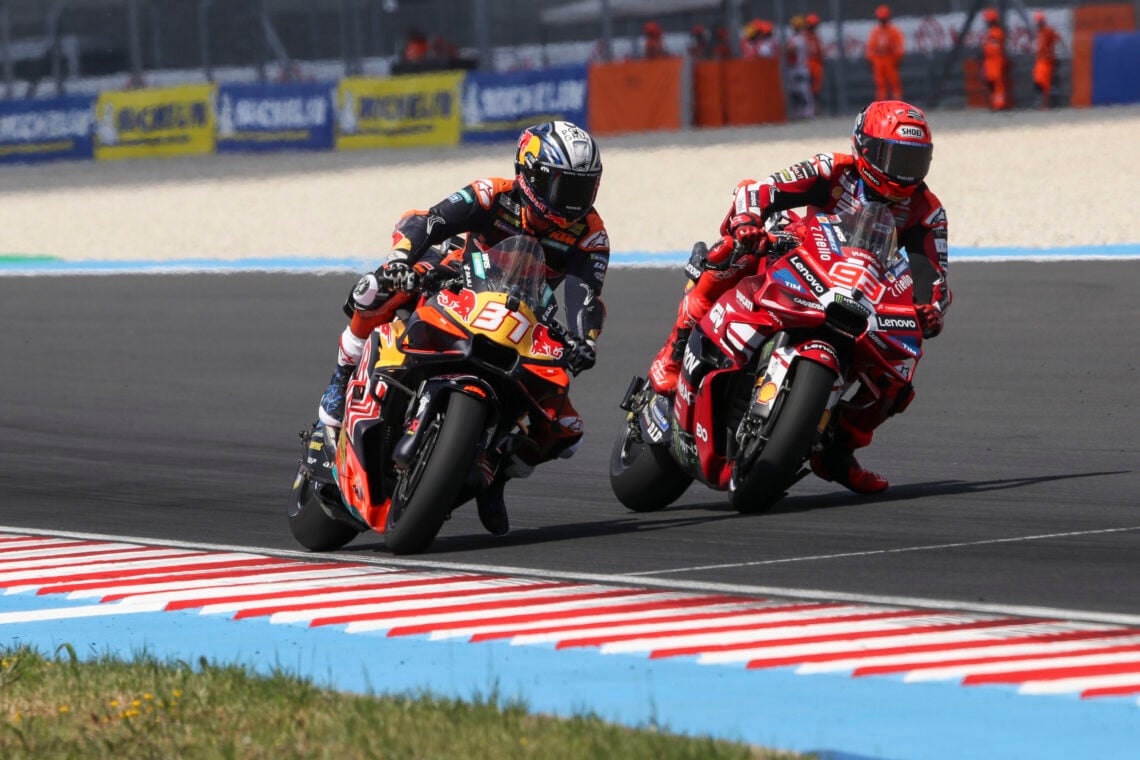


The main differences between the bikes used in MotoGP, Moto2 and Moto3 have been revealed, including engine and tyre rules.
MotoGP has long been the pinnacle of Grand Prix motorcycle racing, with riders coming through Moto2 and Moto3 to reach the premier class.
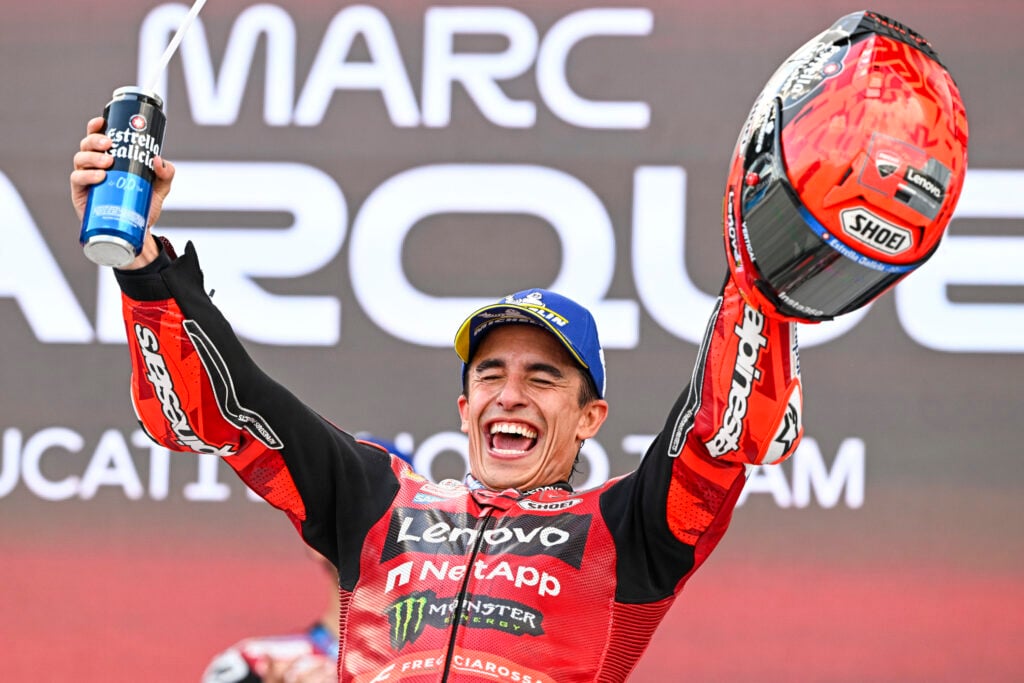
Seven-time MotoGP world champion Marc Marquez raced in Moto2 before moving up to MotoGP in 2013, when he won the title as a rookie.
Current MotoGP riders such as Francesco Bagnaia, Pedro Acosta and Johann Zarco have won titles in the lower categories before moving up to the premier class.
Of all 100 of Marc Marquez’s victories, which one is his BEST?
What are the differences between MotoGP, Moto2 and Moto3 bikes?
Although they fall under the same bracket of Grand Prix motorcycling, the bikes used in each category are different.
For example, MotoGP bikes currently use 1000cc engines, which will change to 850cc from 2027. In comparison, 765cc engines have been used in Moto2 since 2019, with Moto3 using 250cc.
There are different engine manufacturers in MotoGP, including the likes of Ducati, KTM, Aprilia, Honda and Yamaha.
However, in Moto2, all the engines have been made by Triumph since 2019, with Honda being the sole manufacturer from 2010 to 2018. In Moto3, engines are supplied by either Honda or KTM.
In terms of top speed, MotoGP’s top recorded speed was set by Aprilia star Jorge Martin at the 2026 Italian Grand Prix, which was 368.6km/h. Moto2’s top speed is just over 308km/h, with Moto3 considerably slower at around 260km/h.
Perhaps unsurprisingly, MotoGP engines have the most horsepower, at approximately 290bhp. Moto2 power units are lower at 138bhp, but it is still more than double the power of Moto3’s 60bhp engines.
What changes would you make to Fabio Quartararo’s ideal MotoGP rider?

READ MORE: The last MotoGP rider to win the title after missing a race as Marc Marquez eyes comeback
Moving on to weight, MotoGP differs from Moto2 and Moto3 as the premier class does not account for rider weight, but the other two categories do.
MotoGP’s minimum weight is 157kg, while Moto2’s rider and weight must be at least 217kg, with Moto3 having a minimum weight of 152kg.
The tyres used in the three categories also differ. Michelin have been MotoGP’s supplier since 2016, but their contract will end in 2026, with Pirelli taking over.
Pirelli have already supplied tyres for Moto2 and Moto3 since 2024, when they replaced Dunlop.
Although Moto3 bikes run narrow tyres and are lighter, they still manage to deliver significant power considering the weight of the bike and the size of the engine.
Receive racing news and updates twice a week to your mailbox


