

 Marco Bezzecchi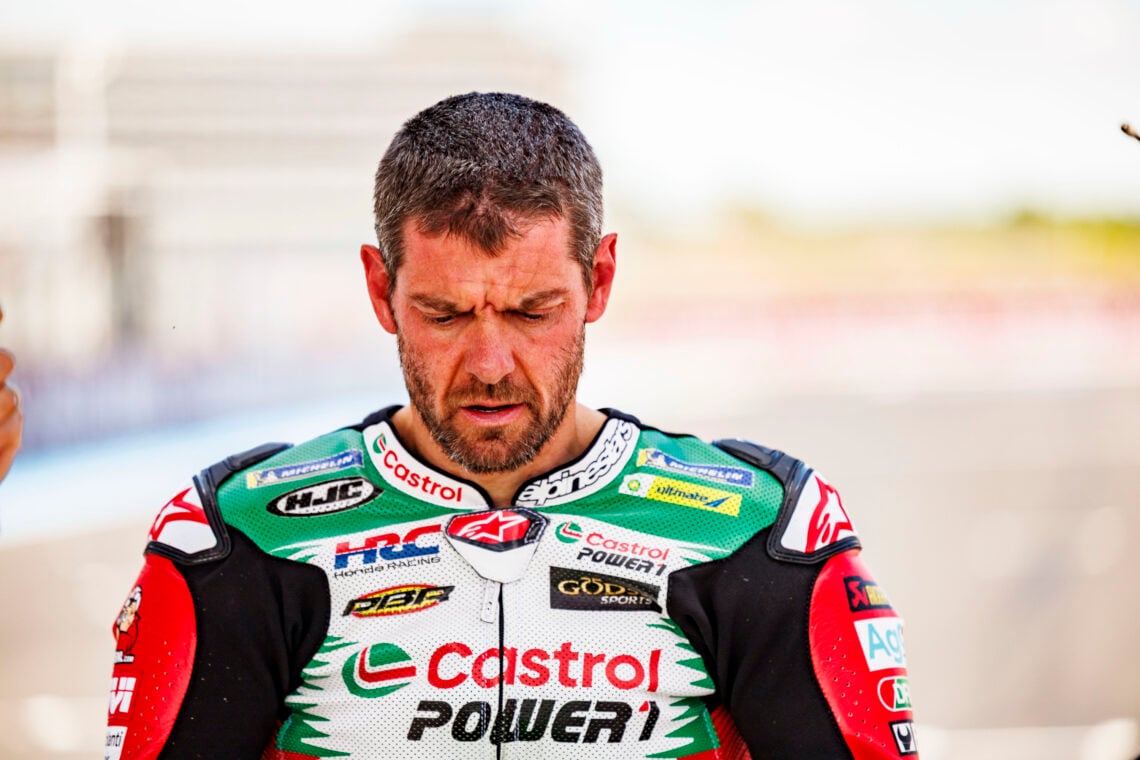

Cal Crutchlow’s return to MotoGP has exposed a problem that MotoGP has with replacement riders, as his lap times with LCR Honda have not been at a competitive level.
Of course, that was to be expected, given that the British rider has not raced in the premier class since he last made a wildcard appearance for Yamaha in 2023. Now 40 years old, he has had no experience with the current machinery in MotoGP.
What did you make of Cal Crutchlow’s return at Mugello?
He didn't reach the chequered flag in Sunday's race
Initially, Crutchlow turned down LCR’s offer to race in place of Johann Zarco following his horror accident in Barcelona. But he did a U-turn and took part in the Italian Grand Prix, with Honda’s options for replacement riders being incredibly limited.
Takaaki Nakagami is focused on developing the 850cc bike for 2027, while Aleix Espargaro is still recovering from a serious testing crash. LCR’s only option, it would seem, was a 40-year-old who has been out of full-time competition in MotoGP since 2020, and that is an issue for the sport.
READ MORE: Who is Cal Crutchlow? Everything to know about Johann Zarco’s replacement for the Italian Grand Prix

MotoGP needs an F1-style superlicence for replacement riders
In Mugello, Crutchlow was 3.1 seconds off the pole time set by Marco Bezzecchi. Perhaps, as expected, he did not make it to the end of the Italian GP due to arm pump, but he was miles off the pace of the grid – again, to be expected.
Crutchlow was chosen to race again in Hungary, and it was a similar outcome in terms of pace. He was last in qualifying, 2.5 seconds off polesitter Marc Marquez and eight tenths behind the next slowest rider, Maverick Vinales.
This time, the Brit did cross the line to finish the Grand Prix in P16, but he was over 54 seconds behind winner Marquez and 22 seconds behind the next rider. With Zarco set for an extended period on the sidelines, Crutchlow will take part in the next two rounds at Brno and Assen.
While LCR needs to have two bikes on the grid, as a contractual obligation first, but also in terms of data for the team, the bar surely needs to be set higher for replacement riders.
Liberty Media wants teams to have reserve riders in the future, and they will want them to be competitive and provide something for the show, instead of languishing at the back of the field.
What are your thoughts on Liberty Media taking MotoGP down the same route as F1?
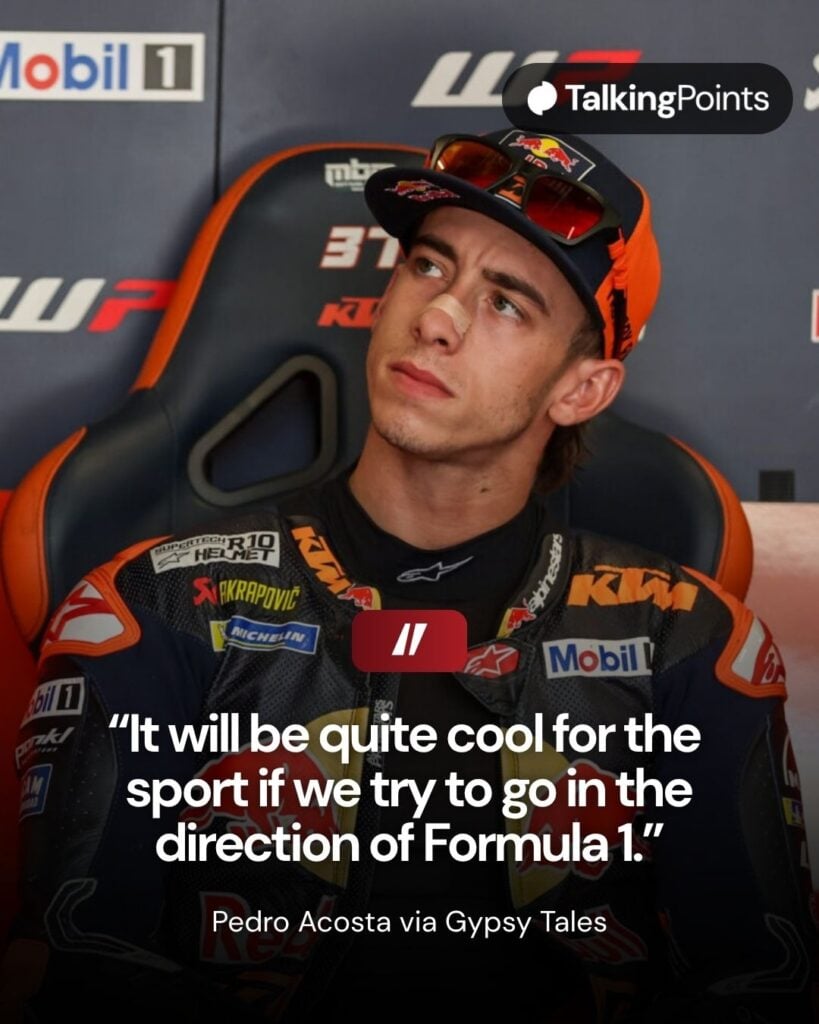
Pedro Acosta thinks it's the right move
A solution would be to adopt a similar system to Formula 1. The FIA has a superlicence for drivers to race in the sport, which can be obtained through winning junior or other motorsport championships and completing extensive test mileage.
This system would prevent MotoGP riders who are clearly not up to the level of the premier class, or no longer in full-time competition, from racing, and it would instead allow those who can be competitive to have a shot.
The perfect benchmark was shown at the Hungarian GP with Iker Lecuona. The World Superbike rider stepped in to replace Alex Marquez at Gresini, and he was not only competitive but also finished an impressive P7 to score nine points.
Active riders in established championships such as WSBK should be the criterion for replacement riders. Crutchlow’s performances have, unfortunately, proved that a superlicence should be necessary, not just for the show, but for the teams to get more accurate data and better results
Receive racing news and updates twice a week to your mailbox


