

 Marco Bezzecchi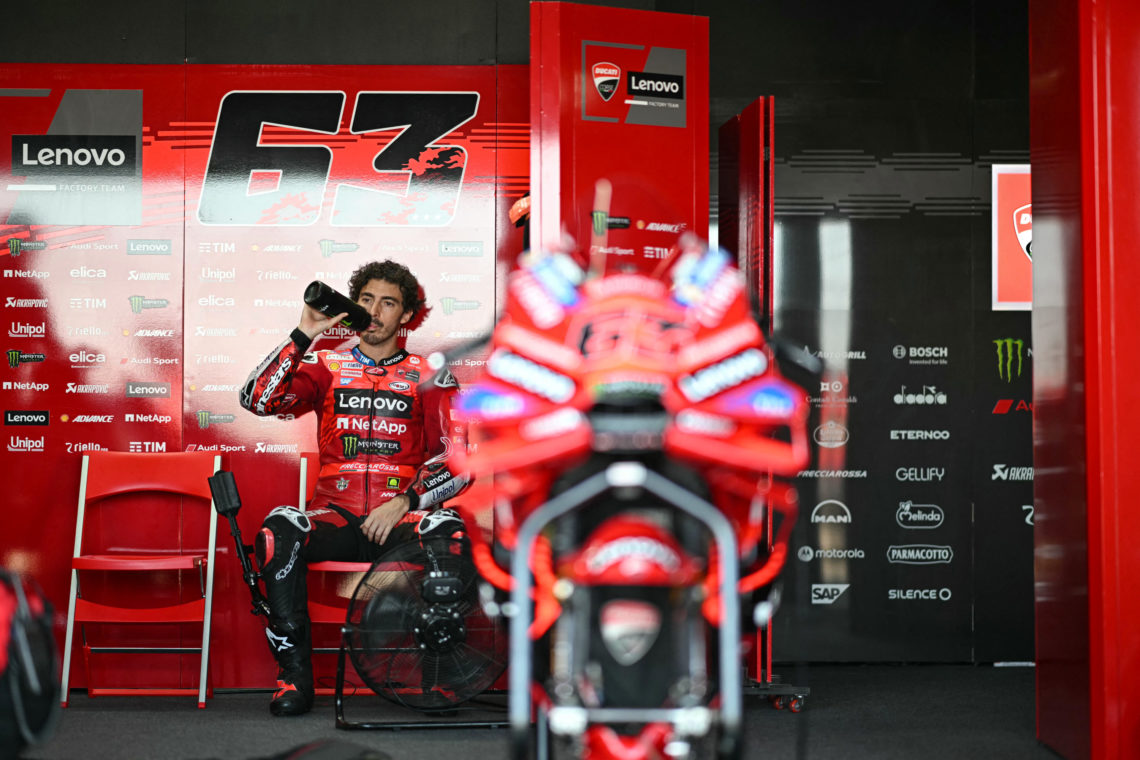


Ducati have been the class of the MotoGP field for the last few seasons and show no signs of slowing down.
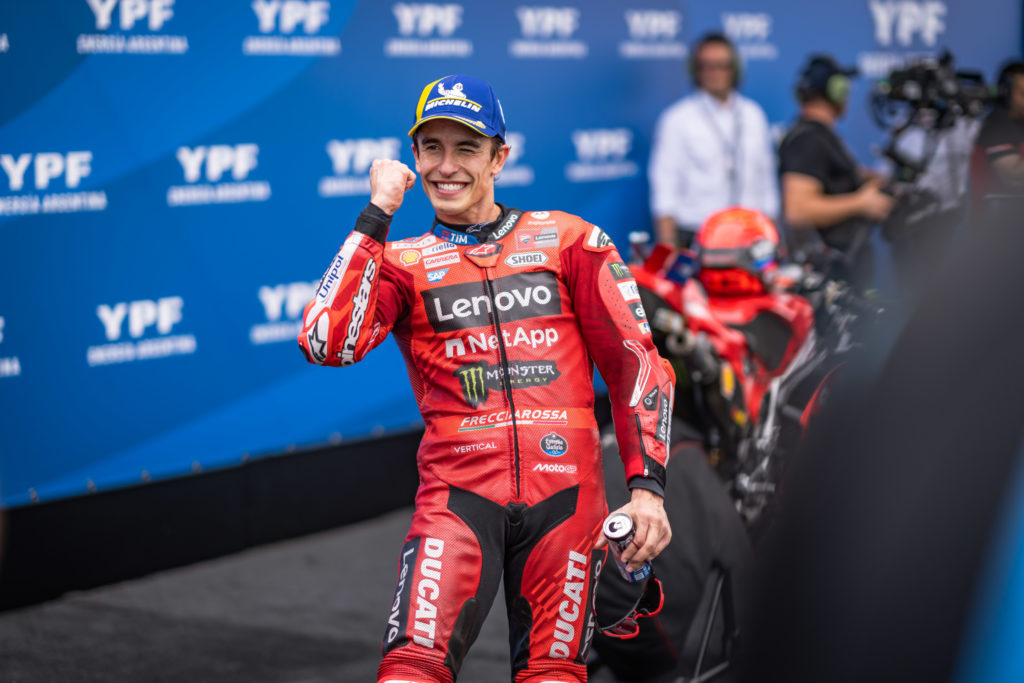
Marc Marquez has dominated the first two rounds of the 2025 season, taking four victories from four races.
In fact, Ducati bikes occupied the top five positions during the Argentina Grand Prix. It’s going to take a remarkable effort to beat them this season.
Marquez’s closest MotoGP competitor seems to be his brother Alex, who has finished second behind him in both races so far.
Ducati have said Marquez ‘wasn’t right’ for them in 2023 after snubbing an earlier opportunity to sign the Spaniard. They had to know that he still had pace.
Something that may scare Ducati’s rivals was an admission Marquez made in Argentina which suggested he wasn’t even pushing.
READ MORE: What Francesco Bagnaia privately said was ‘missing’ from his Ducati bike at Argentina Grand Prix
Mat Oxley predicts Ducati ‘advantage’ in 2027 after Pirelli’s MotoGP deal
On March 6, Pirelli announced that they had agreed a deal with MotoGP to become the sport’s new tyre supplier from 2027 – the start of a new set of regulations.
There was a ‘rumour’ that Pirelli and Michelin were in a tyre bidding war, but the Italian company appears to have won out.
Four of the five manufacturers on the grid race in the World Superbike Championship too – where Pirelli have also operated since 2007.
Mat Oxley believes that Ducati know the Pirelli tyres better than anyone else and that it may be a significant advantage for them in 2027.
“The manufacturers that are heavily involved in World Superbike and know the Pirelli’s very well are going to have an advantage in 2027 aren’t they? Which manufacturer knows the tyres better than anybody else? Ducati,” he said.
Why Ducati may not dominate MotoGP beyond the 2025 season
With Marquez already feeling ‘like a world champion’ in 2025, it’s clear that the rest of the grid has to bring more if they want to compete.
Two manufacturers have a notable advantage in that aspect, thanks to the concession system. Both Honda and Yamaha are exempt from a two-year engine freeze on development.
It means that they are permitted to use two more engines in 2025 and 2026 than their European rivals, as well as develop their engines as much as they would like.
The extra power should hand them a boost in lap time and bring them closer to contention for victories. It does mean that they may have more of a financial burden.
Pouring money into something which won’t be of use in 18 months isn’t too attractive, but sitting at the back of the pack for the next two seasons seems equally, if not more painful.
Receive racing news and updates twice a week to your mailbox


