

 Marco Bezzecchi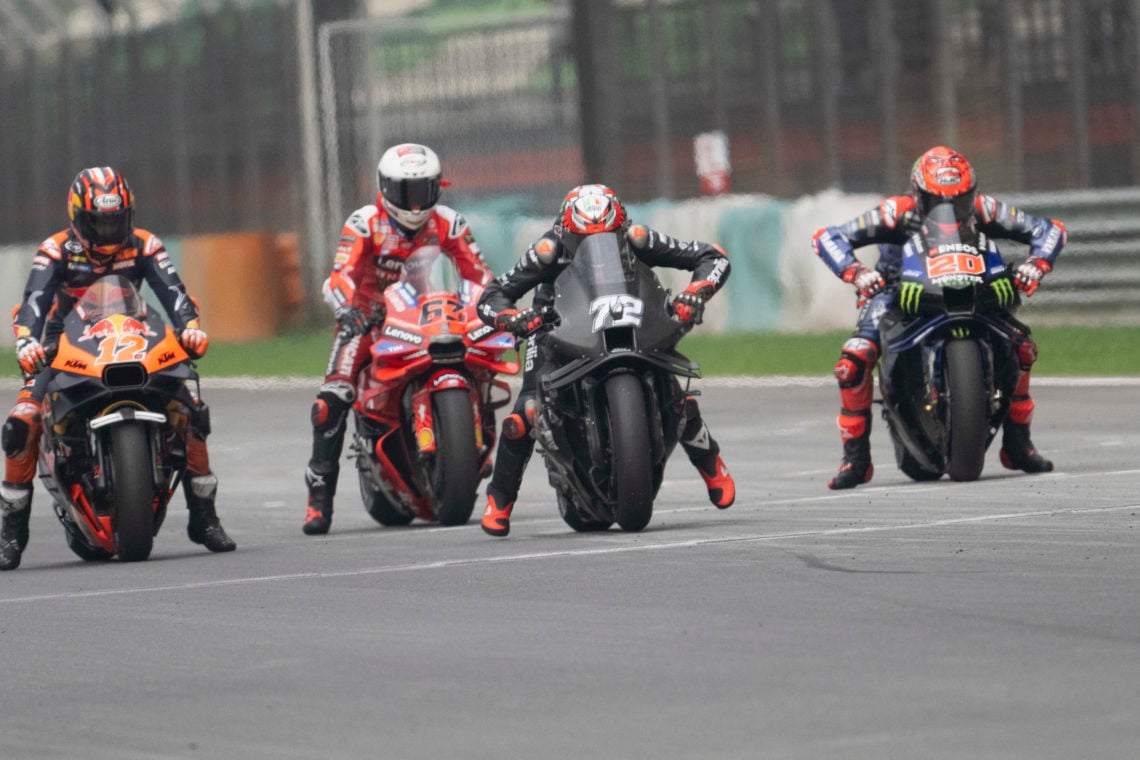


There are few MotoGP rule changes ahead of the 2025 season, but the things that are being changed are very important to take note of.
Michelin abandoned introducing a front tyre last September despite receiving positive feedback from the riders.
It means that the only changes of note this season relate to the engines, with both Yamaha and Honda positioned well to benefit from some new rules.
The concession system means that the Japanese manufacturers are excluded from MotoGP’s engine freeze over the next two years. They can develop as freely as they like.
It’s all because there’s an even bigger set of rule changes on the horizon for 2027, allowing the European manufacturers to focus their efforts on the new generation of bike.

The key MotoGP rule change for 2025 that has already affected Ducati
But the two-year freeze isn’t the only engine-related change for 2025, with another tweak to the rules which may make life slightly more difficult for the riders.
Concession teams are allowed two more engines per season than their counterparts. It means that Yamaha and Honda are permitted to have 10 rather than eight.
The biggest problem anyone has faced so far is Ducati, who spent much of testing trying to decide whether to homologate their new GP25 unit, or stick with the older GP24.
READ MORE: Alex Marquez may have a ‘tinge of regret’ after seeing Ducati’s engine decision for 2025 season
They have a lot more laps under their belt and a lot more information on their older specification, but there was also a lot of resource and money invested into their new project.
In the end, Ducati rejected the GP25 after failing to perfect how smooth it was under engine braking, a critical phase for their riders.
It means they’re operating on what has been dubbed a ‘GP24.9’ bike, a heavily adapted version of last year’s dominant machine.
How do the new rule changes affect the teams for the 2026 MotoGP season
The aforementioned two-year freeze means that teams are forbidden from developing their engine for the 2026 season.
They can opt to homologate a different specification at the start of next year, but they won’t be able to alter what they already have.
Of course, Yamaha and Honda are exempt again and free to do what they would like. Already they have been taking advantage of the situation.
READ MORE: Gino Borsoi loves what Yamaha have done for ‘the first time’ ever before 2025 MotoGP season
Yamaha are doing something ‘pretty crazy’ and are developing two MotoGP bikes at the same time. This includes a new V4 engine which they want to prepare for the 2027 rule changes.
It’s an example of how the concession system may end up handing the Japanese manufacturers a big helping hand ahead of the major rules changes in two years.
Receive racing news and updates twice a week to your mailbox


